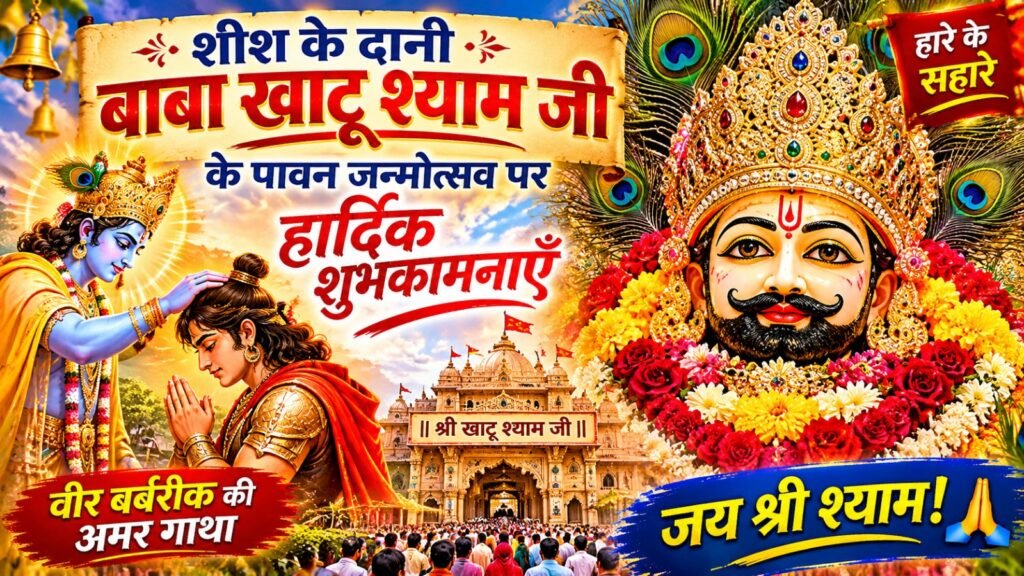

Khatu Shyam Ji Janmotsav 2026: The Divine Story of Veer Barbarik, Sheesh Ke Dani and Haare Ka Sahara
Celebrate the Divine Birth Anniversary of Baba Shri Khatu Shyam Ji with Faith, Devotion and Spiritual Blessings
India is a land of devotion, spirituality and timeless religious traditions. Among the most beloved deities worshipped by millions of devotees is Baba Shri Khatu Shyam Ji, lovingly known as Sheesh Ke Dani, Haare Ka Sahara and Shyam Baba.
The auspicious occasion of Khatu Shyam Ji Janmotsav is a celebration of faith, sacrifice, devotion and divine blessings. On this sacred occasion, devotees remember the extraordinary story of Veer Barbarik, his supreme sacrifice and the divine blessing of Lord Shri Krishna.
Baba Khatu Shyam Ji represents hope for those facing difficulties, strength for those experiencing challenges and spiritual peace for those seeking divine guidance.
1. Who Is Baba Khatu Shyam Ji?
Baba Khatu Shyam Ji is worshipped as a manifestation associated with Veer Barbarik, the legendary warrior of the Mahabharata.
According to popular Hindu tradition, Veer Barbarik was the grandson of Bhima and the son of Ghatotkacha and Maurvi. He was known for his extraordinary courage, warrior skills and unwavering commitment to his promises.
His devotion, sacrifice and dedication earned him a special place in Hindu religious tradition.
Lord Shri Krishna blessed him with the name Shyam, and devotees have worshipped him with immense faith and love ever since.
2. The Inspiring Story of Veer Barbarik
The story of Veer Barbarik is one of the most inspiring legends associated with the Mahabharata.
According to popular tradition, Barbarik possessed three powerful divine arrows, because of which he became known as Teen Baan Dhari.
He made a promise to his mother that he would always support the weaker side in the great Mahabharata war.
When Lord Krishna learned about Barbarik’s extraordinary powers and his promise, he understood that his participation could continuously change the balance of the war.
Lord Krishna approached Barbarik in the disguise of a Brahmin and tested his strength and commitment.
During their conversation, Krishna asked Barbarik for his head as a donation.
Without hesitation, Barbarik agreed to make this supreme sacrifice after recognizing the divine purpose behind the request.
This legendary sacrifice became a symbol of courage, devotion, selflessness and complete surrender.
3. Why Is Baba Khatu Shyam Ji Called Sheesh Ke Dani?
The title Sheesh Ke Dani means the one who donated his head.
Veer Barbarik’s willingness to offer his head to Lord Shri Krishna is remembered as an extraordinary example of sacrifice and devotion.
According to the traditional story, Lord Krishna was deeply pleased with Barbarik’s dedication and granted him a divine blessing.
He declared that Barbarik would be worshipped by the name Shyam in Kaliyug.
This is why millions of devotees lovingly remember Baba Khatu Shyam Ji as Sheesh Ke Dani.
4. Why Is Baba Shyam Known as Haare Ka Sahara?
One of the most popular names of Baba Khatu Shyam Ji is Haare Ka Sahara, meaning the support of those who feel defeated or helpless.
Devotees believe that remembering Baba Shyam gives them courage, hope and strength during difficult moments in life.
People from different backgrounds visit his temple with their prayers, wishes and gratitude.
For many devotees, Baba Shyam represents:
Hope during difficult circumstances.
Courage to overcome challenges.
Faith during uncertain times.
Peace and positivity in everyday life.
Compassion, kindness and devotion.
His message inspires people to remain hopeful and continue following the path of truth and righteousness.
5. Khatu Shyam Temple: A Sacred Destination of Devotion
Located in Khatu village in the Sikar district of Rajasthan, the famous Khatu Shyam Ji Temple is one of India’s most important pilgrimage destinations.
<em>Khatu Dham</em> attracts devotees throughout the year.
The temple becomes especially vibrant during religious celebrations and the famous annual Phalgun Mela, when devotees from different parts of India arrive to seek Baba Shyam’s blessings.
The atmosphere is filled with devotional songs, bhajans, prayers, flowers and chants of:
Jai Shree Shyam!
For devotees, visiting Khatu Dham is not merely a pilgrimage but a deeply emotional and spiritual experience.
6. Spiritual Significance of Khatu Shyam Ji Janmotsav
Khatu Shyam Ji Janmotsav is an occasion to remember the divine story, sacrifice and blessings associated with Baba Shyam.
Devotees celebrate this auspicious occasion through:
Special prayers and devotional rituals.
Bhajans and kirtans.
Temple decorations with flowers and lights.
Religious gatherings and community celebrations.
Distribution of prasad and charitable activities.
Sharing devotional messages and greetings.
The celebration reminds everyone that devotion is not only about rituals but also about kindness, honesty, compassion and service to others.
7. Life Lessons from Veer Barbarik and Baba Shyam
The legendary story of Veer Barbarik offers meaningful lessons for everyday life.
Faith and Commitment: Always respect your promises and remain committed to your values.
Selflessness: True greatness comes from helping others without expecting rewards.
Courage: Face life’s challenges with confidence and determination.
Humility: Strength and success should never create arrogance.
Compassion: Support those who need help and spread kindness wherever possible.
These values make the story of Baba Khatu Shyam Ji relevant across generations.
8. A Special Prayer to Baba Khatu Shyam Ji
O Baba Khatu Shyam Ji, Sheesh Ke Dani and Haare Ka Sahara!
May your divine blessings always remain upon us.
Bless every family with happiness, peace, good health and prosperity.
Give strength to those facing difficulties, hope to those feeling disappointed and courage to everyone struggling through life’s challenges.
Fill our hearts with kindness, devotion, patience and positivity.
May your blessings guide us towards truth, righteousness and a meaningful life.
Jai Shree Shyam! Jai Ho Haare Ke Sahare Ki!
9. Heartfelt Wishes on Khatu Shyam Ji Janmotsav 2026
On this auspicious occasion of Baba Shri Khatu Shyam Ji Janmotsav 2026, may every devotee experience the blessings of faith, peace and happiness.
May Baba Shyam remove negativity from our lives and inspire us to walk on the path of truth, devotion and humanity.
May every home be filled with love, harmony, prosperity and spiritual happiness.
Heartiest wishes to all devotees on the sacred occasion of Khatu Shyam Ji Janmotsav!
Sheesh Ke Dani Baba Khatu Shyam Ji Ki Jai!
Hare Ka Sahara, Baba Shyam Hamara!
Jai Shree Shyam!
Frequently Asked Questions (FAQs)
Q1. Who was Veer Barbarik?
Veer Barbarik was a legendary warrior associated with the Mahabharata tradition. He was the son of Ghatotkacha and grandson of Bhima. He is worshipped as Baba Khatu Shyam Ji.
Q2. Why is Khatu Shyam Ji called Sheesh Ke Dani?
He is called Sheesh Ke Dani because, according to the popular legend, Veer Barbarik offered his head to Lord Shri Krishna before the Mahabharata war.
Q3. Why did Lord Krishna give Barbarik the name Shyam?
According to Hindu tradition, Lord Krishna blessed Barbarik that he would be worshipped by the name Shyam in Kaliyug.
Q4. Where is the famous Khatu Shyam Ji Temple located?
The famous Khatu Shyam Ji Temple is located in Khatu village, Sikar district, Rajasthan, India.
Q5. What does Haare Ka Sahara mean?
Haare Ka Sahara means the support of those who feel defeated or helpless. Devotees believe Baba Shyam gives them hope, courage and spiritual strength.
Q6. How do devotees celebrate Khatu Shyam Ji Janmotsav?
Devotees celebrate with prayers, bhajans, kirtans, temple decorations, devotional gatherings and charitable activities.
Q7. What is the spiritual message of Baba Khatu Shyam Ji?
His devotional tradition inspires faith, sacrifice, humility, compassion, commitment and service to humanity.