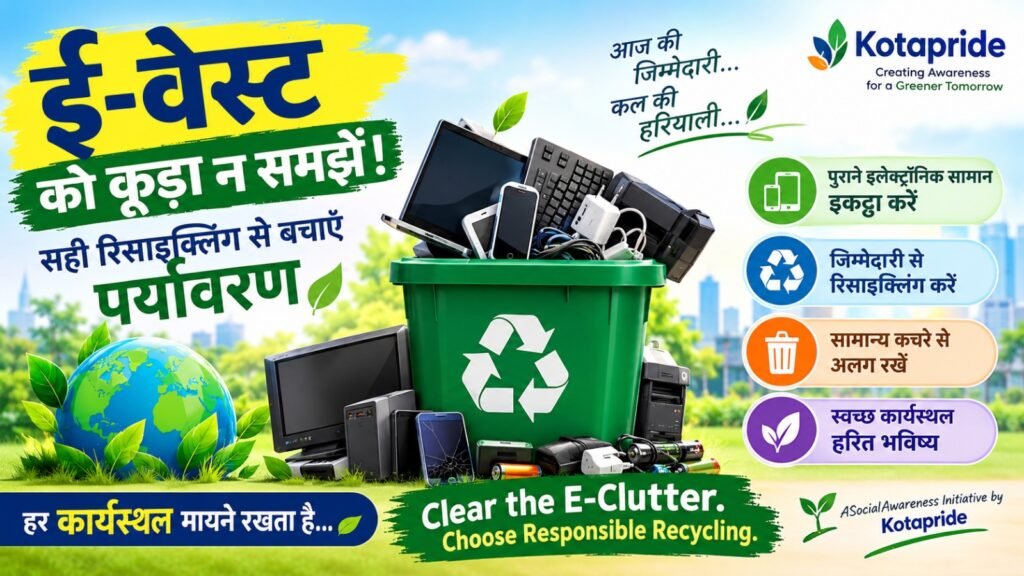

By Kotapride | Environmental Awareness | Sustainable Digital Responsibility
Introduction: Technology Should Create Progress, Not Pollution
Technology has become an essential part of our everyday lives. From smartphones and laptops to computers, printers, televisions, and other electronic devices, we depend on technology at home, in offices, educational institutions, and businesses.
But have we ever stopped to think about what happens when these electronic devices become old, damaged, or unusable?
Many people store unwanted electronics in cupboards, office storage rooms, or desk drawers. Others dispose of them along with ordinary household waste without understanding the possible environmental consequences.
This growing challenge is known as electronic waste, or e-waste.
Responsible e-waste management is an important step toward protecting the environment, conserving natural resources, and creating cleaner and healthier workplaces.
At Kotapride, we believe that awareness is the beginning of positive change. By adopting responsible digital habits and sustainable practices, every individual, business, and institution can contribute to a greener future.
Clear the E-Clutter. Choose Responsible Recycling.
What Is E-Waste?
E-waste refers to discarded electrical and electronic equipment that has reached the end of its useful life or is no longer wanted.
Common examples include:
Old mobile phones and smartphones
Desktop computers and laptops
Computer monitors, keyboards, and mice
Printers, scanners, and photocopiers
Chargers, cables, and electronic accessories
Televisions and other electronic appliances
Electronic equipment used in offices and businesses
These products may contain valuable materials that can be recovered through appropriate recycling processes. However, some components may also contain hazardous substances that can pose risks when handled or disposed of improperly.
This is why electronic waste requires appropriate collection, segregation, transportation, and recycling rather than being mixed with ordinary waste.
Why Is Responsible E-Waste Disposal Important?
1. Protecting the Environment
Improper disposal, open burning, or unsafe dismantling of electronic devices can release harmful substances into the environment.
When e-waste is managed through appropriate collection and recycling systems, the risks associated with uncontrolled disposal can be reduced.
2. Conserving Natural Resources
Electronic devices contain materials such as copper, aluminium, and other recoverable metals.
Responsible recycling can help recover these materials and reduce the need to extract additional raw materials from nature.
3. Supporting Human Health and Safety
Unsafe handling of electronic waste can expose workers and nearby communities to hazardous substances.
Batteries can also present fire and injury risks if they are damaged, crushed, or handled incorrectly.
Using appropriate collection and recycling channels helps promote safer working conditions and responsible waste management.
4. Creating Cleaner Workplaces
Old electronic equipment often accumulates in offices, schools, shops, and institutions.
Regularly identifying unused equipment and arranging its proper reuse or disposal helps keep workspaces organised, cleaner, and more efficient.
5. Encouraging a Circular Economy
A circular economy aims to keep products and materials useful for as long as practical.
Repairing, reusing, refurbishing, and responsibly recycling electronics can help reduce unnecessary waste and make better use of available resources.
Five Simple Steps for Responsible E-Waste Management
Every individual can make a difference by following a few practical steps.
Step 1: Identify Unused Electronic Equipment
Take a look around your home or workplace.
Are old mobile phones, broken keyboards, unused printers, outdated computers, or damaged chargers taking up space?
Identify these items and determine whether they can be repaired, reused, or need to be disposed of responsibly.
Step 2: Keep E-Waste Separate from Ordinary Waste
Do not mix discarded electronic equipment with everyday household or office waste.
Keep unwanted electronics in a secure, dry place where they are protected from damage and are inaccessible to children.
Damaged or swollen batteries require special care and should not be punctured, crushed, or placed casually into storage.
Step 3: Consider Repair, Reuse, or Refurbishment
Not every unwanted electronic device needs to become waste immediately.
If a device is functional or can be safely repaired, consider extending its useful life.
Working equipment may also be suitable for responsible reuse or donation, provided that personal information is removed and the equipment is safe to use.
Step 4: Choose Authorised Collection and Recycling Channels
When electronic equipment can no longer be used, hand it over to an authorised collection centre or an appropriately registered recycler.
Check with your local municipal authority or the relevant authorised collection system to find suitable disposal options.
Avoid informal dismantling, open dumping, and burning electronic equipment.
Step 5: Protect Your Personal Data
Responsible e-waste disposal also includes digital security.
Before handing over a smartphone, computer, or storage device:
Back up important information.
Sign out of personal accounts.
Remove personal and confidential information securely.
Follow the manufacturer’s recommended data-erasure procedure.
Seek professional assistance if the device cannot be accessed or securely erased.
Environmental responsibility and data protection should go hand in hand.
E-Waste Management in Offices and Workplaces
Offices, businesses, educational institutions, and government workplaces can play an important role in promoting responsible e-waste practices.
A simple workplace e-waste management programme can include the following measures.
Create an inventory: Maintain a record of unused, outdated, and damaged electronic equipment.
Establish a collection area: Designate a secure location for temporarily storing e-waste until collection.
Separate electronic waste: Keep e-waste away from ordinary waste and follow appropriate handling instructions.
Educate employees: Explain why electronics should not be dumped, burned, or dismantled informally.
Arrange responsible disposal: Work with appropriate authorised collection centres and registered recyclers.
Review the process: Periodically check stored equipment and ensure that collection and disposal are not unnecessarily delayed.
These measures can help organisations improve housekeeping, reduce unnecessary accumulation, and demonstrate environmental responsibility.
Special Campaign 6.0: A Reminder to Act Responsibly
Special Campaign 6.0 provides an opportunity to reinforce the importance of cleanliness, organised workplaces, effective waste management, and responsible practices.
The message is simple: cleanliness is not only about removing visible waste. It also involves managing different types of waste correctly.
Electronic equipment should not be treated like ordinary rubbish. It requires appropriate segregation, safe handling, and responsible disposal.
Whether it is an office computer, an old mobile phone, or an unused printer, every item deserves proper consideration when it reaches the end of its useful life.
Individuals and organisations can support the broader spirit of cleanliness and sustainability by making responsible e-waste management part of their regular practices.
How Can Families, Schools, and Communities Contribute?
Environmental awareness becomes more effective when it reaches people in their everyday lives.
At Home
Encourage family members to collect unwanted electronics separately and use appropriate recycling channels.
Avoid allowing children to play with damaged electronic devices, loose batteries, or electrical components.
In Schools and Colleges
Conduct awareness sessions to explain e-waste, recycling, resource conservation, and safe digital habits.
Encourage students to share responsible disposal practices with their families.
In Offices and Businesses
Display simple awareness messages near equipment storage areas. Train employees to identify e-waste and follow the organisation’s collection procedure.
In Local Communities
Share reliable information through community groups, resident associations, local businesses, and social media.
Encourage people to locate authorised collection options instead of discarding electronics carelessly.
Small actions become more powerful when an entire community participates.
Common E-Waste Disposal Mistakes to Avoid
To make responsible recycling a habit, avoid these common mistakes:
Throwing electronic equipment into ordinary household bins.
Burning wires, circuit boards, or other electronic components.
Breaking open electronic devices without appropriate training and safety measures.
Discarding damaged batteries carelessly.
Handing over devices containing personal information without considering data security.
Keeping unwanted electronics indefinitely without a plan for reuse or responsible disposal.
Assuming that every scrap dealer or collection point is authorised to handle all types of e-waste.
The better approach is to identify the equipment, store it safely, protect personal data, and confirm the appropriate authorised disposal channel.
Building a Culture of Digital and Environmental Responsibility
Our digital world continues to expand, bringing new opportunities for communication, education, business, and innovation.
However, progress should also include responsibility for the resources and waste associated with technology.
A sustainable digital future requires more than purchasing modern devices. It requires us to think carefully about how we use, maintain, reuse, and eventually dispose of them.
Every household can contribute.
Every office can improve its practices.
Every school can educate students.
Every business can encourage responsible behaviour.
And every individual can inspire someone else to take the right step.
At Kotapride, we believe that awareness is a meaningful starting point for building a more responsible society. Sharing useful information and encouraging practical action can help people make better decisions for their communities and the environment.
Take the E-Waste Responsibility Pledge
Let us make a simple commitment:
I will not mix e-waste with ordinary waste.
I will not burn or casually dismantle discarded electronic equipment.
I will keep unwanted electronics separate and handle them safely.
I will use appropriate authorised collection and recycling channels.
I will protect my personal information before disposing of electronic devices.
I will encourage my family, colleagues, and community to adopt responsible practices.
These commitments may appear small, but consistent action can contribute to meaningful environmental progress.
Conclusion: A Cleaner Tomorrow Begins Today
A cleaner and greener future does not depend on one person or one organisation alone. It depends on the collective efforts of individuals, families, workplaces, businesses, and communities.
Responsible e-waste disposal is a practical way to protect our surroundings, conserve valuable resources, and promote safer waste management.
The next time you find an old mobile phone, computer, charger, or printer, do not simply throw it away or forget about it.
Pause, identify the right option, and take responsible action.
Clear the E-Clutter. Choose Responsible Recycling.
Every Workspace Counts. Every Responsible Action Matters.
Let us work together toward cleaner workplaces, more responsible communities, and a greener tomorrow.
A Social Awareness Initiative by Kotapride — Creating Awareness, Inspiring Responsibility, Building a Better Tomorrow.
Frequently Asked Questions About E-Waste Management
1. What is e-waste management?
E-waste management involves the appropriate collection, segregation, storage, transportation, reuse, refurbishment, and recycling of discarded electrical and electronic equipment.
2. Can e-waste be thrown into regular garbage bins?
No. Electronic waste should be kept separate from ordinary waste and handed over through an appropriate authorised collection or recycling system.
3. Where can I dispose of old electronics in India?
Contact your local municipal authority, an authorised e-waste collection centre, or an appropriately registered recycler to identify a suitable disposal option.
4. Why should old mobile phones and computers be recycled?
Responsible recycling can help recover useful materials, reduce uncontrolled disposal, and limit the environmental risks associated with improper handling.
5. What should I do with an old phone before recycling it?
Back up important information, sign out of accounts, securely erase personal data, and follow the manufacturer’s instructions. Handle the battery safely.
6. Can electronic devices be reused instead of recycled?
Yes. If a device is safe and functional, repair, reuse, or refurbishment may extend its useful life. Equipment that cannot be reused should be managed through suitable recycling channels.
7. How can businesses reduce e-waste?
Businesses can maintain an equipment inventory, extend device lifespans where practical, establish separate collection arrangements, train employees, and use authorised recycling channels.
8. How can individuals spread e-waste awareness?
Share reliable information, encourage responsible disposal, educate family members and colleagues, and participate in appropriate community awareness activities.